Portfolio item number 1
Short description of portfolio item number 1
Short description of portfolio item number 2 
Published in Journal 1, 2009
This paper is about the number 1. The number 2 is left for future work.
Recommended citation: Your Name, You. (2009). "Paper Title Number 1." Journal 1. 1(1).
Download Paper | Download Slides | Download Bibtex
Published in Journal 1, 2010
This paper is about the number 2. The number 3 is left for future work.
Recommended citation: Your Name, You. (2010). "Paper Title Number 2." Journal 1. 1(2).
Download Paper | Download Slides
Published in Journal 1, 2015
This paper is about the number 3. The number 4 is left for future work.
Recommended citation: Your Name, You. (2015). "Paper Title Number 3." Journal 1. 1(3).
Download Paper | Download Slides
Published in GitHub Journal of Bugs, 2024
This paper is about fixing template issue #693.
Recommended citation: Your Name, You. (2024). "Paper Title Number 3." GitHub Journal of Bugs. 1(3).
Download Paper
Published in GitHub Journal of Bugs, 2024
This paper is about a famous math equation, \(E=mc^2\)
Recommended citation: Your Name, You. (2024). "Paper Title Number 3." GitHub Journal of Bugs. 1(3).
Download Paper
Published:
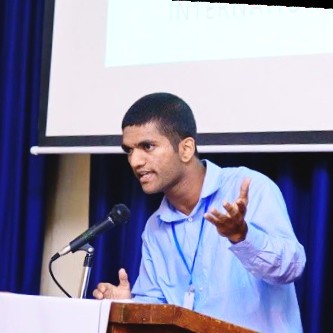
Organized by the IEEE Student Branch of University of Kelaniya Abstract: Trustworthy AI in computer vision necessitates models that are not only accurate but also reliable and aware of their limitations. Two critical pillars for achieving this trust are Out-of-Distribution (OOD) detection and model calibration. OOD detection aims to identify inputs that differ significantly from the training data, preventing overconfident and erroneous predictions on unfamiliar or anomalous samples. Calibration ensures that a model’s predicted confidence scores accurately reflect its true probability of being correct, separating predictive performance from reliability assessment. This work explores the synergy and challenges at the intersection of these fields. We review contemporary methods for OOD detection, including those based on density estimation, distance metrics, logit analysis, and energy scores, and techniques for calibration, such as temperature scaling and ensemble-based approaches. Achieving robust OOD detection and calibration is essential for the safe deployment of vision systems in real-world, open-ended environments, forming the foundation for trustworthy AI that can recognize and express its own uncertainty.
Undergraduate course, University of Melbourne, Department of Mechanical Engineering, 1900
Marker, Tutor for 2023-SM2, 2024-SM2, 2026-SM1 Marked Assignments and conducted tutorials on programming.
Undergraduate course, University of Melbourne, Department of Mechanical Engineering, 1900
Marker, Tutor for 2024-SM1, Marked Assignments and supervised projects.